CIO, CFO, procurement, and transformation leaders
Structure executive decisions around evidence, readiness gates, vendor/SI commitments, open risks, and operational impact.
A private buyer-side toolkit for ERP conversion, data migration, integration tracking, UAT, cutover readiness, vendor/SI commitment control, and executive go/no-go decisions.
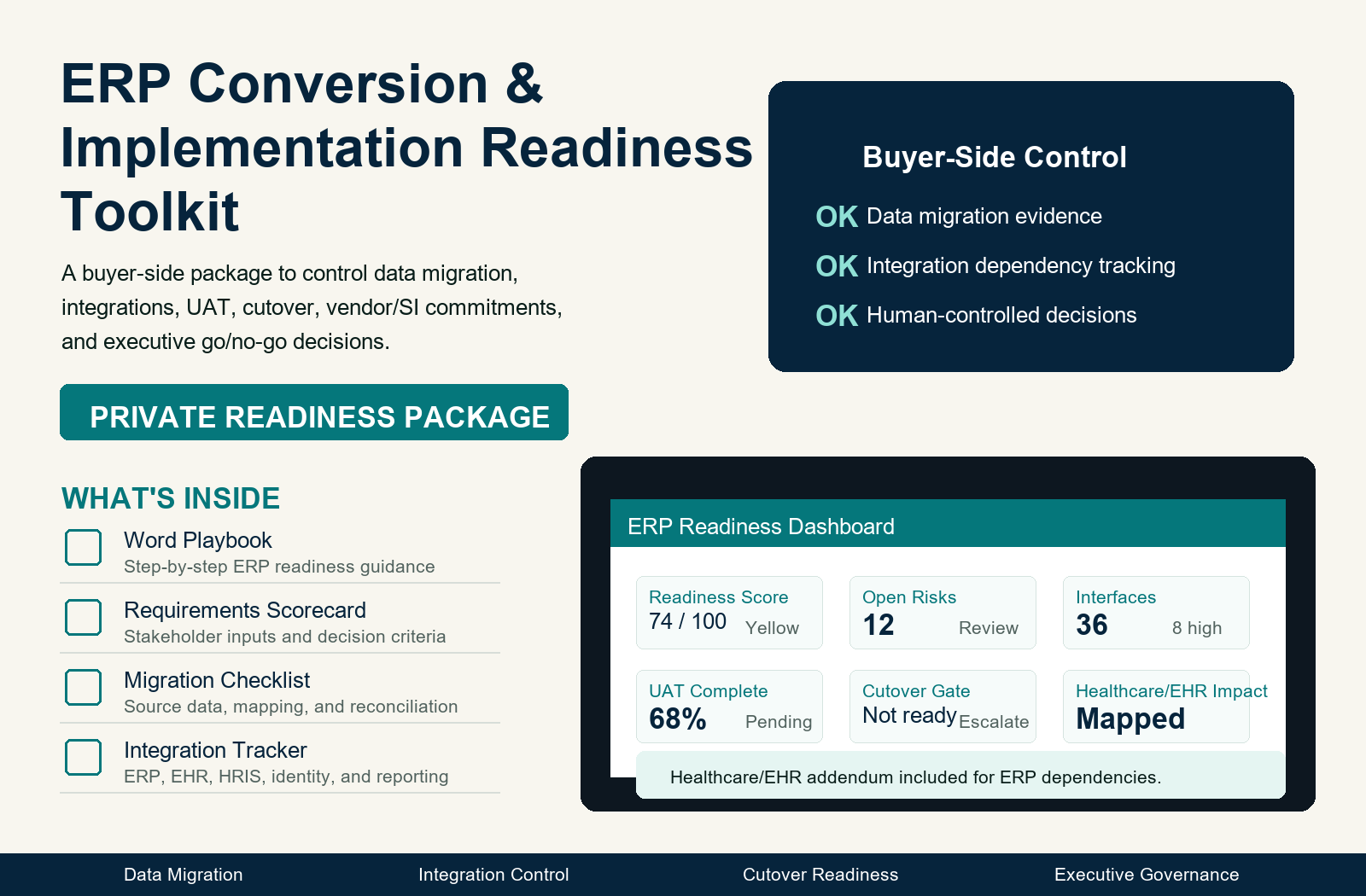
ERP conversions can drift when buyer-side teams depend too heavily on vendor or systems-integrator status reporting without a structured way to test readiness, validate assumptions, control commitments, and escalate unresolved risk.
This toolkit helps procurement, IT, finance, operations, PMO, legal, security, privacy, and executive stakeholders organize the work around evidence: source data, integrations, UAT, cutover, training, support, contract/SOW obligations, and go/no-go readiness.
The full editable package has been built. Premium files are not publicly posted; access is handled manually through Request Access.
Structure executive decisions around evidence, readiness gates, vendor/SI commitments, open risks, and operational impact.
Track data migration, integration, UAT, cutover, training, defects, assumptions, dependencies, and signoffs.
Use healthcare/EHR-adjacent checkpoints when ERP dependencies affect EHR interfaces, revenue cycle, supply chain, provider or employee data, reporting, or operational continuity.
Use a practical buyer-side package for readiness workshops, diligence support, steering committee preparation, and implementation governance.
Organize source systems, data quality, migration runs, reconciliation, defects, signoffs, and cutover constraints.
Track interfaces across ERP, EHR, HRIS, payroll, identity, data warehouse, procurement, finance, reporting, and third-party systems.
Separate contracted obligations, assumptions, deliverables, acceptance criteria, change-order risk, and unresolved clarifications.
Convert readiness evidence, risks, open decisions, and stakeholder signoffs into executive-ready decision support.
No checkout, payment processing, automated delivery, or public premium download is connected.
Identify revenue cycle, provider, employee, item master, purchasing, identity, and reporting touchpoints that can affect healthcare operations.
Flag where BAAs, security review, access controls, audit logs, or privacy review may be needed before ERP data moves.
Review supply chain, staffing, finance, procurement, reporting, and support dependencies that can indirectly affect patient-care operations.
Coordinate ERP conversion timing against EHR upgrades, interface changes, payer workflows, reporting calendars, and operational blackout periods.
Leadership sees evidence, assumptions, risks, unresolved decisions, and go/no-go criteria in one structured packet.
Commitments, deliverables, dependencies, and acceptance criteria are tracked before scope gaps become delays or change orders.
Data, integrations, UAT, reporting, identity, and healthcare/EHR-adjacent dependencies are surfaced before cutover pressure rises.
Teams move from general project status to concrete readiness evidence, owner accountability, and human-controlled decisions.
For planning, sourcing, contracting, ERP transformation, data migration, integration planning, cutover readiness, testing, training, and operational support only. This material is not legal, financial, accounting, tax, compliance, privacy, security, clinical, medical, or professional advice. Users remain responsible for qualified review, source validation, security/privacy review, financial review, clinical/operational review where applicable, approvals, and final decisions.
Please do not submit confidential employer, client, vendor, patient, pricing, contract, security, or proprietary materials through the request form.
Use the private inquiry form to discuss individual access, team licensing, training use, white-label use, partner use, or custom ERP toolkit development.